
When installing exposed-fastener metal roofing, one of the most common questions is simple:
Should metal roofing screws go on the rib or the flat?
Quick Answer:
For ABM Panels, screws should go in the flat area beside the major rib, following the recommended screw pattern. This gives the washer a flatter surface to seal against and helps the screw hold more securely.
For ABM Panels and many modern exposed-fastener metal roofing systems, the recommended best practice is to fasten the screw in the flat of the panel, not on top of the rib.
That may be different from what some installers learned years ago. And there is a reason for that.
Older roofing methods were often based around nails and older fastener styles. Today, metal roofing screws and sealing washers are designed to perform differently. With the right screw, the right placement, and the right amount of compression, fastening in the flat lets the washer sit flatter and seal more evenly.
The Short Answer: Fasten in the Flat
For ABM Panel installation, screws should be placed in the flat area near the major rib according to the recommended screw pattern.
This helps the fastener do its job properly:
- The washer seals more evenly.
- The screw has better holding power.
- The fastener is less likely to move as the panel expands and contracts.
- The seal is more consistent over time.
That is especially important on post frame roofing, barns, garages, shops, agricultural buildings, and other exposed-fastener metal roofing projects where long-term weather protection matters.
Why the Flat Is Usually Better
A metal roofing screw depends on the washer to seal out water.
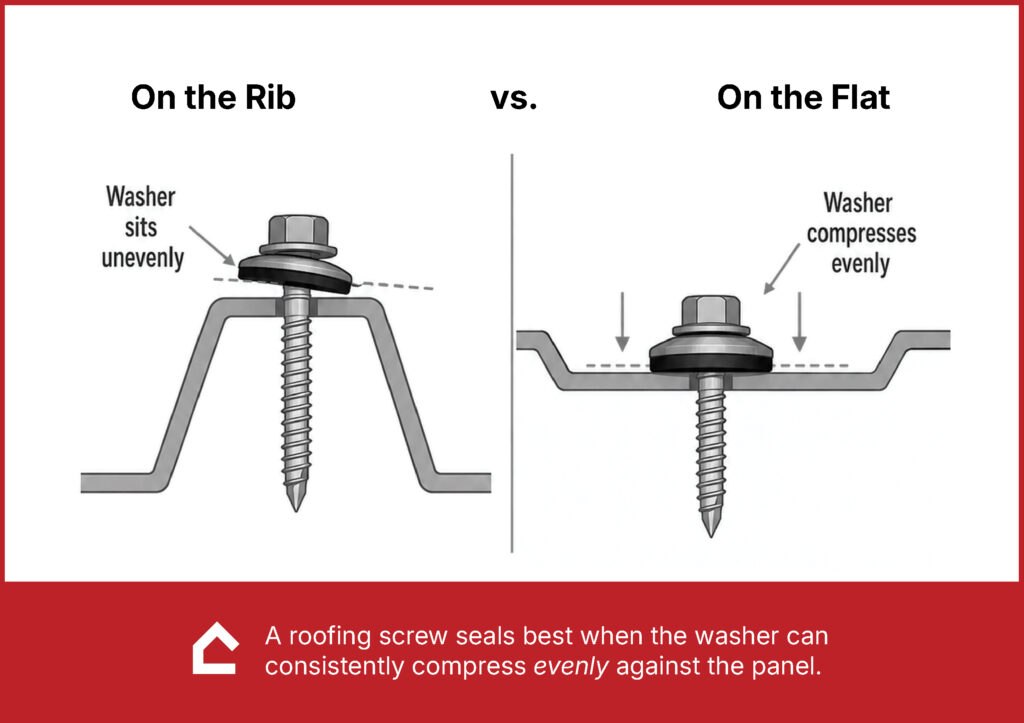
When a screw is driven into the flat, the washer sits flatter and seals more evenly. That creates a cleaner seal and reduces the chance of water working its way around the screw.
Fastening in the flat also gives the screw a stronger, more direct pull into the wood purlin or roof deck below. On the rib, the panel has more room to flex. That movement can put stress on the fastener over time.
With modern metal roofing fasteners, the goal is not just to hold the panel down. The goal is to hold it securely while keeping a watertight seal.
Why Did Installers Used to Put Screws on the Rib?
The rib method did not come out of nowhere. For years, many metal roofs were installed with nails or older fastener systems. Since the rib was higher than the flat, that’s where installers put the fasteners to keep them farther away from water running down the roof.
That made sense with the materials and methods used at the time, but metal roofing best practices have changed. Modern roofing screws are built with washers designed to compress against the panel. Because of that, the flat is now the preferred screw placement for many exposed-fastener metal roofing systems, including ABM Panels.
This is not saying the old way was foolish. It is simply a case where the product has changed, so the installation method has changed too.
Quick Comparison:
Rib Fastening:
- Older method
- Kept fasteners higher above water
- More panel movement
- Washer may not sit evenly
Flat fastening:
- Recommended for ABM Panels
- Better washer contact
- Better hold into framing or decking
- More consistent seal over time
Where to Screw Metal Roofing on ABM Panels
For ABM Panels, follow the official installation instructions and screw pattern for your application.
In general, metal-to-wood screws with sealing washers should be driven into the valley or bottom flat surface beside the major rib. Make sure the screw enters the solid framing or decking below.
Before installation, check:
- Roof pitch
- Purlin spacing
- Screw length
- Screw pattern
- Trim details
- Local building requirements
You can view more product information on Cumberland Supply’s ABM Panel page or browse the full metal panels lineup.
How to Avoid Metal Roof Leaks Around Screws
Correct screw placement is only part of the job. The screw also needs to be installed correctly.
A few basic metal roofing installation tips:
- Use the right screw for the panel and substrate.
- Make sure screws have the proper sealing washer.
- Drive screws straight, not at an angle.
- Compress the washer firmly against the panel.
- Do not overdrive the screw.
- Do not leave the screw loose.
- Replace any stripped, crooked, or damaged fasteners.
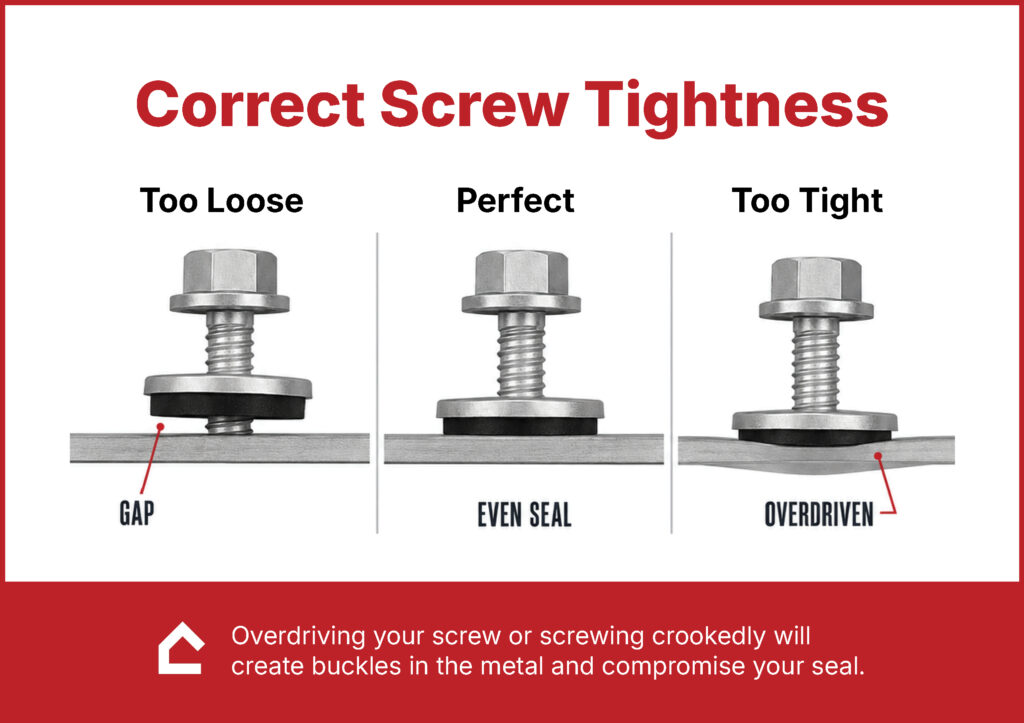
A properly driven screw should compress the washer enough to seal, but not so much that the washer bulges out or the panel dimples.
Overdriving can damage the washer or deform the panel. Under-driving leaves a gap where water can enter.
Use the Right Fasteners for the Job
For exposed fastener metal roofing, the fastener matters.
The right screw length, coating, washer, and head style all help the roof perform the way it should. For ABM Panels, use fasteners recommended for the panel, framing, and application.
Need screws, panels, trim, or other roofing accessories? Browse Cumberland Supply’s metal roofing accessories or check the catalog for more product details.
Have Questions Before You Install?
Metal roofing is straightforward when the right materials are installed the right way.
If you are working on a barn, garage, home, shop, or agricultural project, Cumberland Supply can help you choose the right panel, fasteners, trim, and accessories for the job.
Explore our metal panels, watch more helpful videos in our video gallery, or contact Cumberland Supply with questions about your project.
FAQ’s:
Why did installers formerly screw on the rib?
Many older metal roofs were installed with nails or older fastener styles. Since the rib was higher, installers often fastened there to keep the fastener away from standing water. With modern metal roofing screws and sealing washers, fastening in the flat is usually the better practice.
Can screws on the rib cause leaks?
They can, especially if the screw flexes, shifts, or does not allow the washer to seal evenly. The main issue is movement. A screw placed on the rib can experience more panel flex than one placed in the flat.
How tight should metal roofing screws be?
Tight enough to compress the washer securely against the panel, but not so tight that the panel dimples or the washer bulges out. Overdriving and under-driving can both lead to leaks.
What screws should I use for ABM Panels?
Use metal roofing screws recommended for ABM Panels such as ST Fasteners’ Woodbinder Kwikseal with the proper length, coating, and sealing washer. For help choosing fasteners, visit Cumberland Supply’s metal roofing accessories or contact us.
Not sure which screws or panel pattern your project needs? Call Cumberland Supply or stop by the store in Newville. We can help you choose the right panel, fastener, and accessories before you install.