
For a lot of homeowners, the question is simple when comparing metal roofing to shingles:
How long does a metal roof last?
Quick Answer:
A quality metal roof can often last 30 to 50+ years when the right panel is installed correctly and maintained over time. Exposed-fastener systems like ABM Panel can perform well for many years, while standing seam systems like ABSeam may offer longer-term advantages because the main fasteners are hidden.
When people ask, “How long does a metal roof last?” they usually want one number.
The better answer is: it depends.
A well-installed metal roof can often last 40 years or more. Some systems can last much longer with the right materials, roof design, and maintenance.
Still, not every metal roof performs the same way.
A simple roof on a home may age differently than a roof on a livestock barn. A standing seam roof may perform differently than an exposed-fastener roof. A properly installed panel may last far longer than the same panel installed with poor flashing, poor screw placement, or the wrong fasteners. Metal roofing is a long-lasting choice, but the full roof system matters.
Feel free to reach out with any questions specific to your roof.
Metal Roof vs. Shingles Lifespan
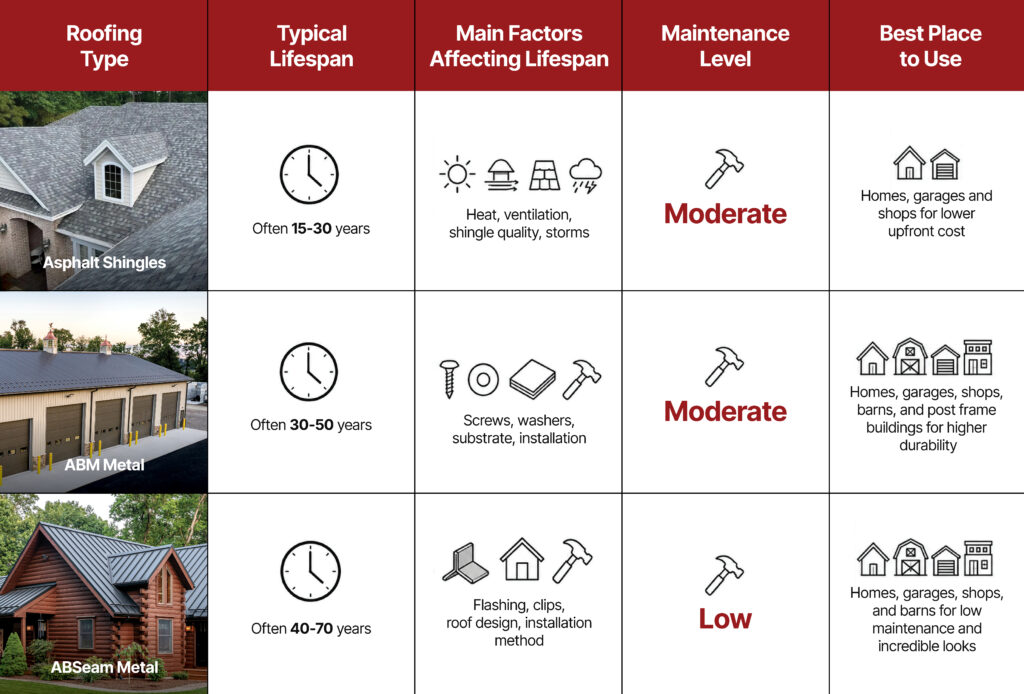
Shingles may cost less upfront, which is why many buyers consider them first. But metal roofing can reduce replacement cycles over time, making it a stronger long-term option for many homes, barns, shops, and post-frame buildings.
Consumer Reports notes that metal roofing can last around 40 years on the low end, while asphalt roofs often last about 20 to 30 years depending on installation quality and other conditions.
This does not mean every metal roof will outlast every shingle roof in every situation. Installation quality still matters. But when comparing metal roof vs. shingles lifespan, metal roofing usually has the long-term advantage.
Exposed-Fastener vs. Standing Seam Lifespan
The biggest difference between exposed-fastener and standing seam metal roofing is how the panels are attached.
Exposed-fastener panels are attached through the face of the panel with screws and sealing washers. This is a common, practical choice for homes, barns, shops, garages, and post-frame buildings.
Standing seam panels use hidden clips. The main fasteners are not exposed across the roof surface, which reduces long-term wear around screws and washers.
That does not make exposed-fastener panels weak. It just means they need to be installed correctly and inspected over time.
It also does not mean standing seam roofs never need maintenance. Checking on trim, flashing, valleys, pipe boots, and sealants still matter.
How ABM Panel Fits In
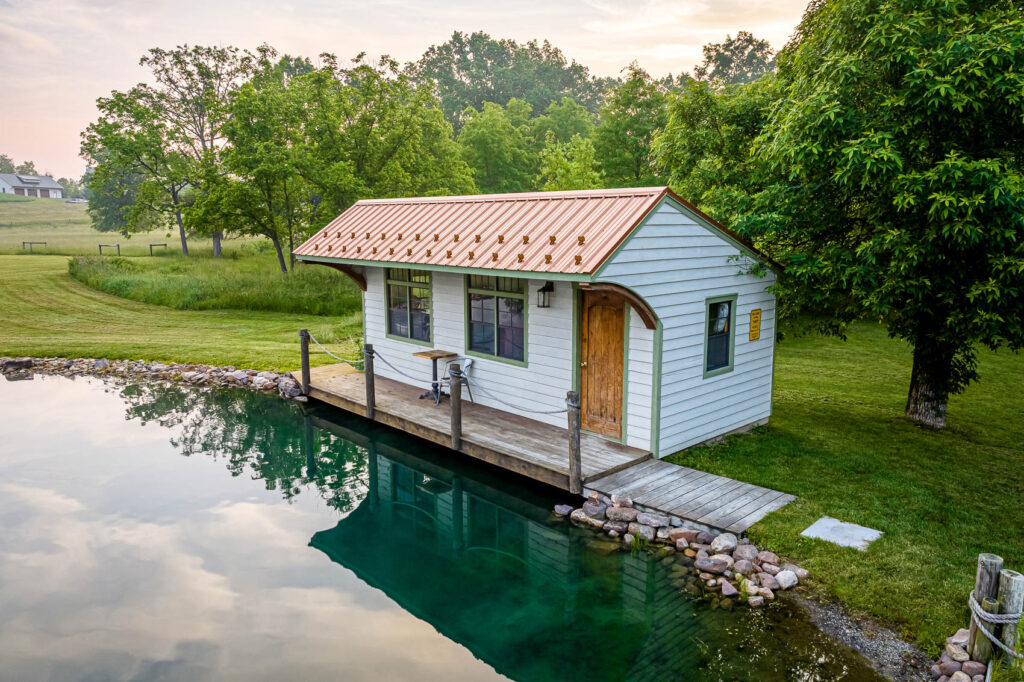
ABM Panel is a heavy-duty exposed-fastener metal panel.
It is commonly used for residential, commercial, agricultural, and post-frame roofing and siding. It is rolled to custom lengths, which helps reduce waste and simplify installation.
ABM Panel is available in several options, including:
- G-100 galvanized
- AZ50 Galvalume
- Textured finishes
- 40-year paint warranty options
ABM Panel is also heat-formed to help reduce microscopic cracking in the paint during the forming process.
For long-term performance, the key is choosing the right substrate, using the right fasteners, and installing the panel correctly.
Screw placement matters. Overdriven screws can damage washers. Underdriven screws may not seal. Poor overlap can cause leaks. Wrong fastener choice can shorten roof performance.
For more detail, read a related article on whether metal roofing screws should go on the rib or flat.
We’ll cover the full ABM Panel vs. ABSeam Panel comparison in a separate guide.
How ABSeam Panel Fits In
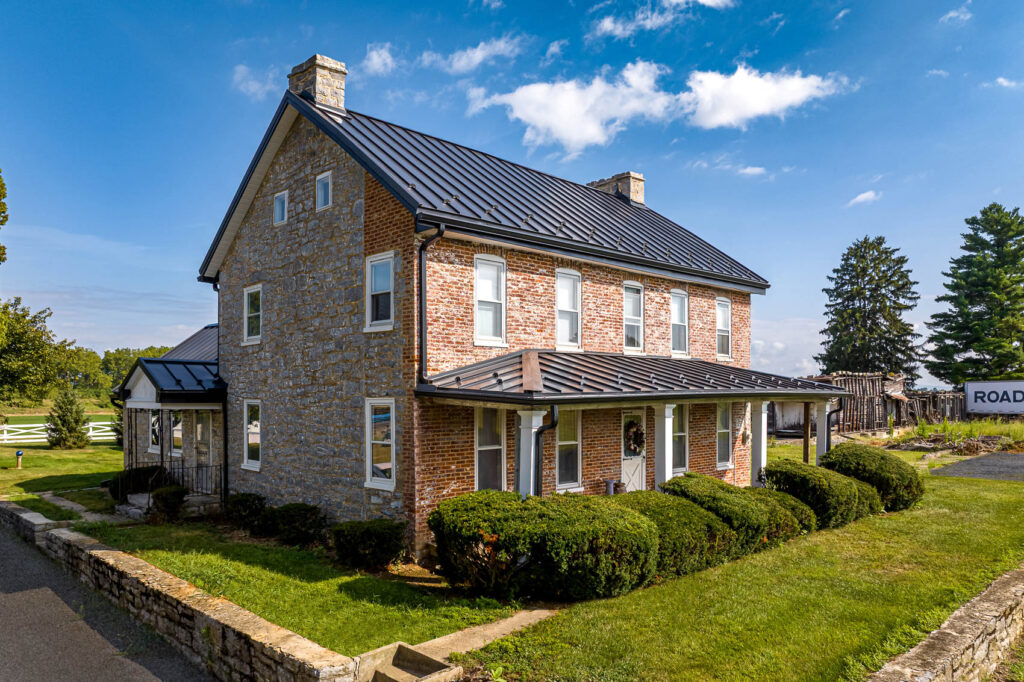
ABSeam Panel is the standing seam option.
It uses hidden clips, so the main fasteners are not visible on the roof surface or directly exposed to the weather. This gives the roof a clean look and can help with long-term performance.
ABSeam is a strong choice for homeowners, contractors, and property owners who want a standing seam metal roof with fewer exposed fastening points.
Still, the roof needs proper installation. Flashing, trim, penetrations, valleys, roof slope, and ventilation all affect the final lifespan.
Standing seam is a premium system, but it is still a system. The details matter.
Why Substrate Affects Metal Roofing Lifespan
The steel coating under the paint affects how the panel performs over time.
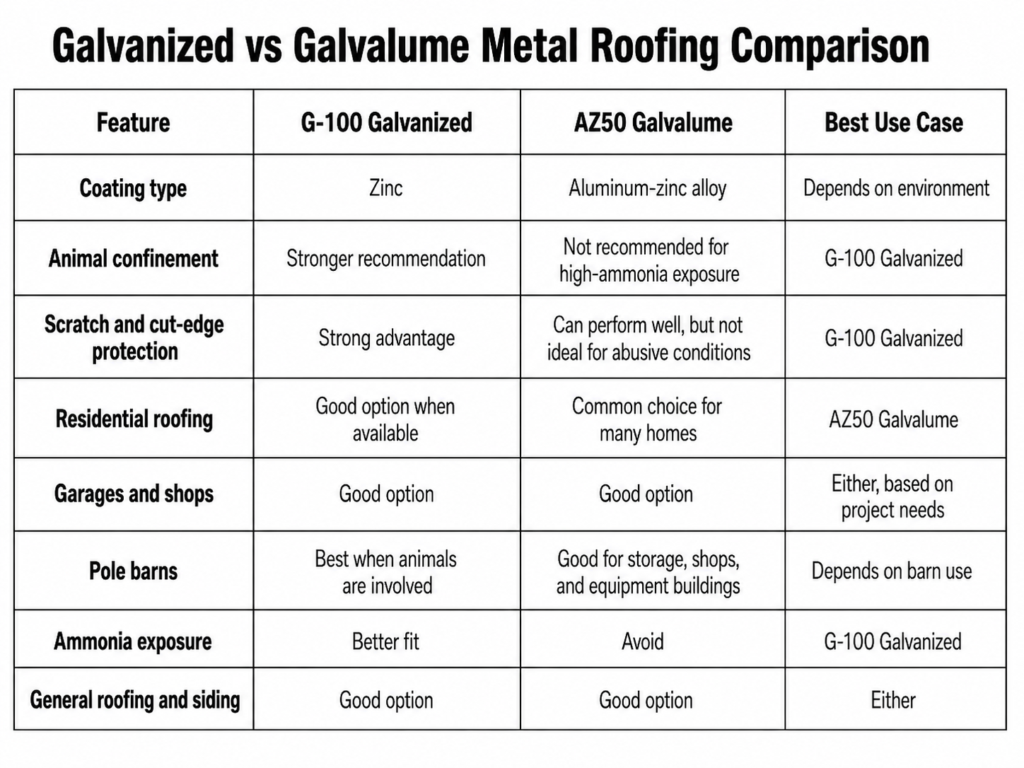
Galvanized and Galvalume are not the same.
G-100 galvanized is a strong option when ammonia exposure is a concern. That makes it a good fit for many barns and livestock buildings.
AZ50 Galvalume is a good fit for many homes, garages, shops, storage buildings, and other non-abusive environments.
The wrong substrate can shorten the life of a roof, especially in agricultural settings. A panel that works well on a garage may not be the right choice for a livestock barn.
For more detail, read the related article on galvanized vs Galvalume metal roofing.
What Affects the Lifespan of a Metal Roof?
Several things affect how long metal roofs last.
1. Installation Quality
A good panel can fail early if it is installed poorly.
Screws, overlaps, flashing, trim, sealants, ventilation, and penetrations all need to be handled correctly.
2. Fasteners
Fasteners are especially important on exposed-fastener metal roofing.
Overdriven screws can crush the washer. Underdriven screws may not seal. The wrong screw can shorten roof performance.
3. Trim and Flashing
Trim and flashing protect edges, valleys, ridges, sidewalls, endwalls, and transitions.
Poor flashing is one of the fastest ways to create leaks.
See available metal roofing accessories for screws, pipe boots, snow guards, tools, and related products.
4. Ventilation
Good ventilation helps control heat and moisture.
Poor ventilation can lead to condensation and other issues under the roof system.
5. Building Environment
A roof on a house does not face the same conditions as a roof on a livestock barn.
Moisture, ammonia, chemicals, tree debris, salt, snow, and roof traffic can all affect lifespan.
6. Maintenance
Metal roofing maintenance is usually simple, but it should not be ignored.
Check for loose fasteners, worn washers, damaged pipe boots, scratched panels, clogged gutters, lifted flashing, and debris buildup.
How to Make a Metal Roof Last Longer
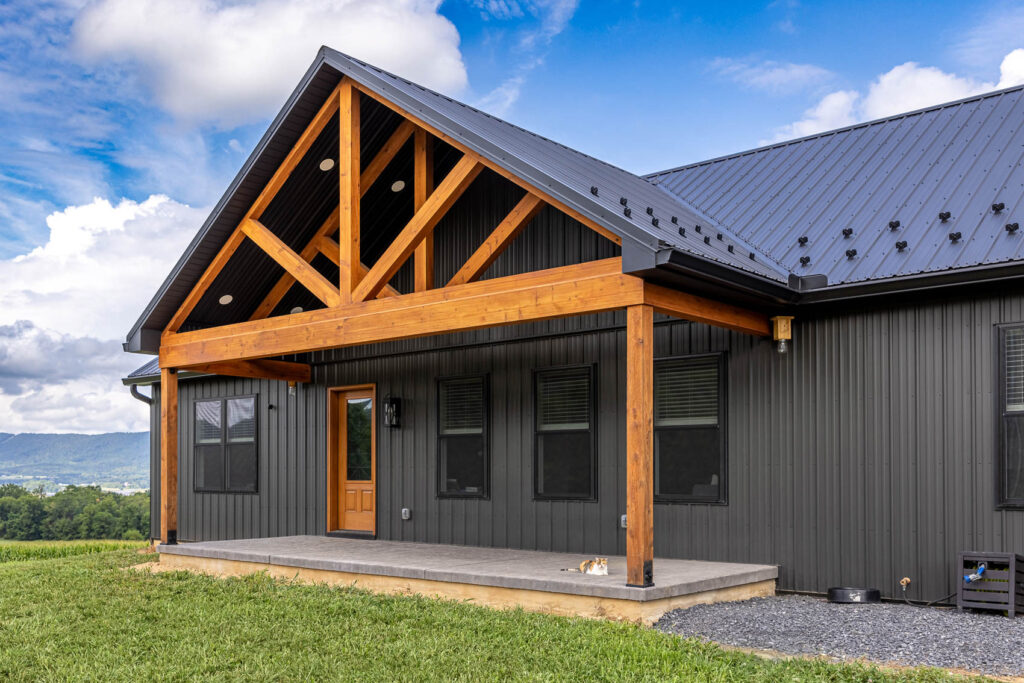
A metal roof lasts longer when the right products are used the right way.
Start by choosing the right panel for the building. ABM Panel is a durable exposed-fastener option for many homes, barns, shops, commercial buildings, and post-frame projects. ABSeam Panel is a strong standing seam option when hidden clips and fewer exposed fasteners are a priority.
Choose the right substrate for the environment. G-100 galvanized is a strong choice where ammonia is a concern. Galvalume works well for many non-abusive applications.
Use the correct fasteners. Install screws properly. Pay close attention to trim, flashing, overlaps, pipe boots, and ventilation, then inspect the roof over time. Small problems are easier to fix before they become leaks.
You can compare more panel options on the metal panels page, view product details in the catalog or downloads page, or browse finished projects in the photo gallery.
ABM Panel or ABSeam Panel: Which Is Better for Long-Term Performance?
ABM Panel is a strong choice when you want a durable exposed-fastener metal panel for roofing or siding. It is practical, heavy-duty, and used across many residential, commercial, agricultural, and post-frame projects.
ABSeam Panel is a strong choice when you want a standing seam roof with hidden clips and fewer exposed fastening points on the main roof surface.
ABSeam may offer long-term advantages because of its concealed fastening system. ABM can still perform very well when installed correctly and maintained over time.
The better choice depends on the building, budget, roof design, environment, and maintenance expectations.
Have questions about the right panel for your project? Contact us before you order.
FAQs
How long does a metal roof last?
A quality metal roof can last for several decades. The exact lifespan depends on the panel type, substrate, installation, environment, maintenance, and roof design.
Does a metal roof last longer than shingles?
Usually, yes. Metal roofing often lasts longer than asphalt shingles, especially when installed correctly.
Does a 40-year warranty mean my roof will last 40 years?
Not exactly. A 40-year paint warranty does not guarantee that the entire roof system will last exactly 40 years. Fasteners, installation, substrate, ventilation, flashing, and maintenance still matter.
Which lasts longer: exposed-fastener metal roofing or standing seam?
Standing seam often has a long-term advantage because the main fasteners are hidden. Exposed-fastener metal roofing can still last a long time when installed correctly and maintained.
Do metal roof screws need maintenance?
Yes. Exposed-fastener roofs should be inspected over time for loose screws, worn washers, damaged pipe boots, and other small issues.
What causes a metal roof to fail early?
Poor installation, wrong fasteners, overdriven screws, underdriven screws, poor overlap, bad flashing, wrong substrate, poor ventilation, scratches, and harsh building conditions can all shorten roof life.
How can I make my metal roof last longer?
Choose the right panel and substrate, use the correct fasteners, install the roof properly, keep the roof clean, maintain ventilation, and inspect it over time.
Is ABM Panel or ABSeam Panel better for long-term performance?
ABSeam has long-term advantages because of its hidden clip system. ABM Panel is still a strong exposed-fastener option for many homes, barns, shops, and post-frame projects. The better choice depends on the building and the budget.