
Quick Answer
To prevent condensation in a pole barn, reduce moisture at its source and match ventilation, insulation, air sealing, and vapor control to the building’s use. First, rule out roof leaks. A dripping roof can have more than one cause, and no single product fixes every moisture problem.
Why Does a Pole Barn Roof Sweat?
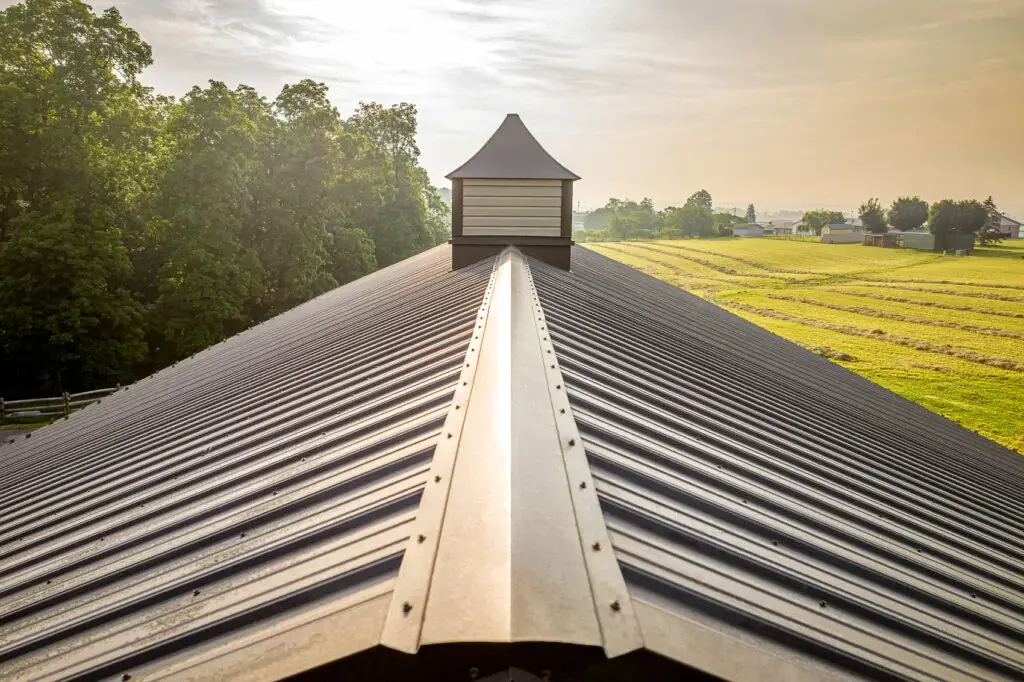
Condensation forms when moisture in the air meets a cold enough surface, much like droplets on a cold drink. Inside a pole barn, that surface may be the underside of the metal roof.
It often becomes more noticeable in winter, when roof surfaces are colder and doors stay closed. However, water dripping inside does not automatically mean condensation. Flashing, fasteners, penetrations, and damaged panels can also let water in.
For more on the roof itself, read How to Prevent Condensation Under Metal Roofing.
Start With What Happens Inside
The right solution depends on where the moisture comes from.
- Garages and shops: Wet vehicles, snowmelt, washing, and people add moisture. Unvented fuel-burning heaters also release water vapor and combustion gases indoors; have heating and venting reviewed if these are used.
- Livestock barns: Animals, manure, wet bedding, and spilled water create an ongoing moisture load. Closing the barn tightly to retain warmth can trap moisture and ammonia.
- Storage buildings: Damp ground, wet equipment, and stored materials can contribute even without heating. Gravel alone does not block ground moisture.
Start with simple corrections: repair plumbing or waterer leaks, remove standing water, and direct roof runoff away from the building. If storage space becomes a heated shop or animal barn, reassess the moisture plan.
Give Moisture a Way Out
Ventilation needs planned air intake and exhaust. A fan circulating air inside does not replace fresh-air exchange, and attic vents do not automatically ventilate the space below a ceiling.
Livestock barns need ventilation suited to the animals and their moisture load. Heated garages and shops need ventilation coordinated with heating and cooling; some may also need dehumidification.
Insulation and air sealing help keep moist indoor air from contacting cold building surfaces. They serve different purposes: insulation slows heat transfer, while air sealing closes unintended gaps. See How to Insulate a Pole Barn for more detail.
Vapor control slows moisture moving through materials. Its type and placement depend on the climate and complete wall or roof design. Do not assume adding interior plastic will solve the problem.
Roof underlayment has a separate job: secondary water protection where the assembly requires it. Read Do You Need Underlayment Under a Metal Roof? before choosing roof layers.
A Quick Troubleshooting Checklist
Use these clues to guide an inspection. Condensation and leaks can occur together, so one symptom is not a diagnosis.
| What You Notice | What to Check | Next Step |
|---|---|---|
| Drips during or after rain | Flashing, fasteners, penetrations, and panel damage | Have roof leaks ruled out |
| Widespread droplets in cold weather | Indoor humidity, cold surfaces, and air leakage | Review moisture sources and the building assembly |
| Moisture after parking or washing | Snowmelt, wet equipment, and standing water | Manage water and review ventilation |
| Damp dirt, gravel, or concrete | Ground moisture, plumbing, and exterior runoff | Review drainage and floor moisture control |
| Wetness after adding heat or a ceiling | Heater type, blocked airflow, and changed air paths | Reassess the building’s moisture plan |
Get professional help if dripping persists, the source is unclear, or you find wet insulation, mold, corrosion, or deteriorating wood. A roofer can check for leaks; a building-envelope, HVAC, or agricultural ventilation specialist can assess the wider moisture problem. Avoid covering damp materials with a liner before resolving the cause.
Plan Before Closing the Building
For a new post-frame building, discuss its use before finalizing drainage, floor details, roofing, insulation, ventilation, and interior finishes.
Planning a post-frame building or dealing with moisture in one you already have? Cumberland Supply can help you compare roofing, insulation, ventilation, liners, and moisture-control products for the building you’re working with.
FAQs
Does insulation stop pole barn condensation?
Not by itself. Insulation can help keep surfaces warmer, but moisture sources, air leakage, ventilation, and vapor control still matter.
Do unheated pole barns get condensation?
Yes. Moisture from damp ground, wet equipment, or outdoor air can collect on cold surfaces even without a heating system.
Can condensation cause corrosion?
Repeated wetting can contribute to corrosion, particularly in harsh agricultural environments. Compare Galvanized vs. Galvalume when choosing ABM Panel, and read How Long Does a Metal Roof Last? for maintenance considerations.
Can I fix condensation by adding a roof vent?
It may help if ventilation is inadequate, but it will not fix a leak, remove every moisture source, or correct a poorly planned wall or roof assembly.
Having Moisture Problems in Your Pole Barn?
Planning a post-frame building or dealing with moisture in one you already have? Cumberland Supply can help you compare roofing, insulation, ventilation, liners, and moisture-control products for the building you’re working with