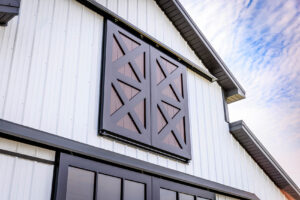

A sliding barn door may look simple, but dependable operation requires more than a track and two rollers. The track, trolleys, frame, guides, stops, latches and seals must all work together.
Whether you are building a new equipment shed, replacing worn hardware or finishing a post-frame barn, understanding these components will help you choose the right sliding door system.
How does a sliding barn door system work?
Quick Answer:
A complete agricultural sliding door system typically includes an upper track, mounting brackets, trolleys, a structural door frame, bottom guides, stops, latches and a track cover. Weather stripping or brush seals can also be added to reduce drafts and rattling.
Every component must be selected for the door’s size, weight, thickness and configuration. Mixing incompatible track, trolleys and guides can make a door difficult to operate or leave it vulnerable to wind damage.
Why Sliding Doors Work Well on Agricultural Buildings
Sliding doors remain a popular choice for barns, equipment-storage buildings and other agricultural structures because they can cover wide openings without taking up interior space.
Unlike an overhead door, a sliding door does not require tracks extending into the building. This preserves the full interior ceiling area and makes sliding doors useful for tall equipment and older buildings with limited headroom.
Sliding doors are commonly used on:
- Machinery and equipment sheds
- Hay and feed storage buildings
- Livestock barns
- Horse barns and riding arenas
- Cold-storage buildings
- Workshops and general-purpose post-frame buildings
They are especially practical when the opening is large but does not need to be opened and closed constantly throughout the day.
The Main Parts of a Sliding Barn Door System
Each component has a specific job. Leaving out a guide, stop or latch can affect the performance of the entire door.
| Component | Main Job |
|---|---|
| Upper Track | Supports the door and provides the path for the trolleys. |
| Track Brackets | Secure the track to the header, wall, or ceiling. |
| Trolleys | Carry the door's weight and allow it to move smoothly. |
| Door Frame | Keeps the door square and supports the exterior panels. |
| Bottom Guide | Controls the lower part of the door and reduces sway. |
| Door Stops | Keep the door from traveling beyond its intended stopping point. |
| Latches & Snuggers | Hold the door closed and pull it toward the building. |
| Track Cover | Protects the track from weather and creates a finished appearance. |
| Weather Seals | Help reduce drafts, rattling, and moisture around the door edges. |
A properly designed door uses all these components as one coordinated system.
Round Track vs. Square Track
Cumberland Supply offers parts for both round-track and square-track sliding door systems.
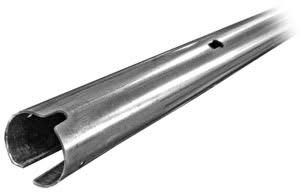
Round Keyhole Track
Round keyhole track is a versatile option for agricultural and post-frame buildings. Its rounded shape helps center the trolley wheels while moving dirt and debris away from the rolling surface.
Other benefits include:
- Smooth, dependable operation
- Compatibility with wood and metal-framed doors
- Multiple bracket and trolley options
- Single, split and bypass-door configurations
- Track lengths for a wide range of openings
When paired with the appropriate Delrin-wheel trolleys, Cumberland’s round-track system can support doors weighing up to 600 pounds. Properly configured double-truck trolleys are available for heavier doors weighing up to 1,200 pounds.
These capacities depend on using the correct track, trolleys, brackets, bracket spacing and supporting structure. Door weight should never be considered separately from the rest of the system.
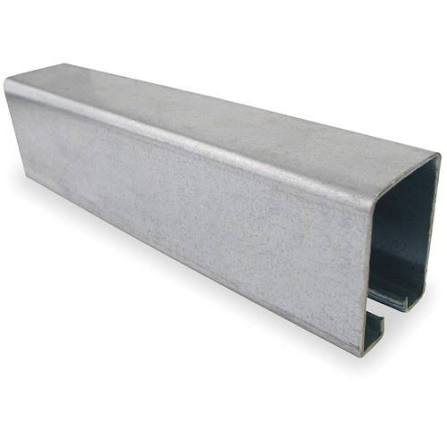
Square Track
Square track is another option for agricultural sliding doors. It may be useful when replacing an existing square-track system or when a particular mounting arrangement calls for it.
Cumberland offers square track with:
- Standard and splice brackets
- Double track brackets
- Side and top adjustable trolleys
- Threaded-bolt trolley options
- Delrin bearing options
Because capacities vary by trolley and installation, the track and hardware should be matched to the individual door rather than selected by appearance alone.
Choosing a Door Configuration
The available wall space around the opening will help determine how the doors should operate.
Single Sliding Door
A single door moves completely to one side of the opening. It is a straightforward arrangement, but the building must have enough clear wall space beside the opening for the entire door.
Split Sliding Doors
Split or bi-parting doors consist of two leaves that meet in the center and move in opposite directions. Each door travels only half the total opening width, making this configuration practical for wide agricultural openings.
Split doors require center guides and latching hardware to keep both leaves aligned when closed.
Bypass Sliding Doors
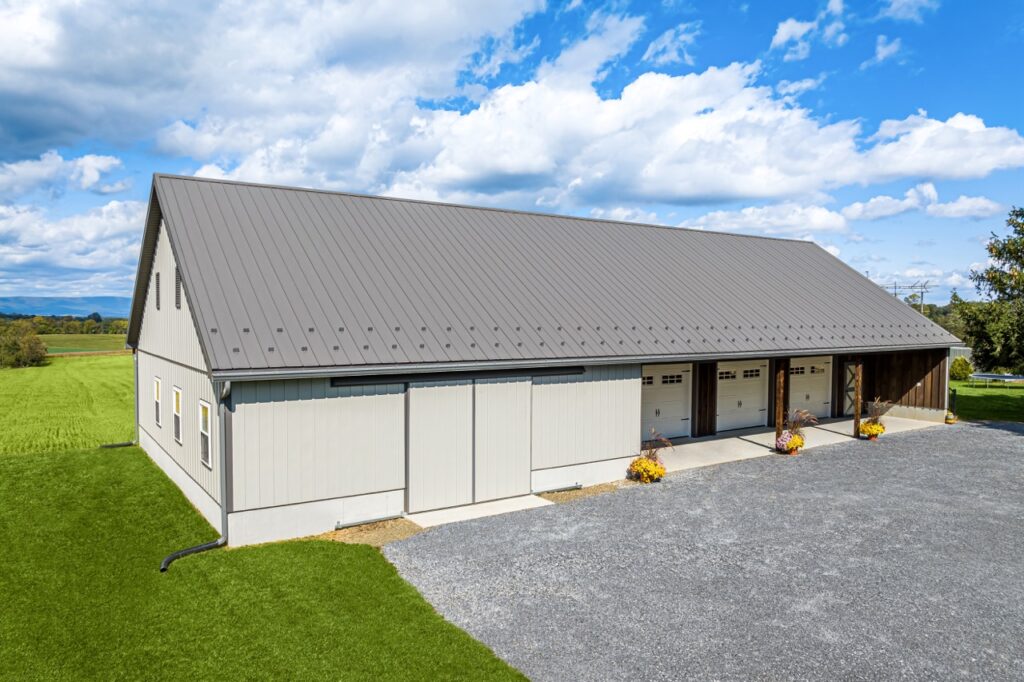
Bypass doors use two parallel tracks. The doors move past one another and stack in front of the same section of wall.
This arrangement can help when the building does not have enough unobstructed wall space for a conventional single or split door. However, it requires double-track brackets and additional clearance away from the building.
Do Not Overlook the Bottom Guide
The upper track carries the door, but the bottom guide controls it.
Without proper lower guidance, a large door can swing away from the building, bind during operation or become damaged in high winds. Cumberland offers several bottom-control options, including:
- Adjustable door guides
- Floor-mounted guides
- Center guides
- Stay rollers
- Bottom guide rails
A continuous or extended guide-rail system offers more control than a small guide at a single point. Cumberland generally recommends guide-rail lengths measuring approximately 60% of the door-panel width.
The correct guide depends on the door frame, thickness, ground conditions and whether the doors are single or split.
Frames, Rails and Exterior Panels
The door frame must remain square while carrying the exterior metal and resisting everyday movement.
Sliding doors may be constructed with wood framing, galvanized steel girts, aluminum rails or a combination of these materials. Cumberland carries horizontal steel girts along with standard and heavy-duty side and bottom rails.
Aluminum rails provide clean finished edges around the door and will not rot like exposed wood. Galvanized steel girts add horizontal support without making the finished door unnecessarily heavy.
The exterior can then be finished with metal panels coordinated with the rest of the building. Cumberland’s ABM Panel and matching trim can help the completed door look like part of the original structure instead of a later addition.
Latches, Stops and Snuggers Matter
Agricultural doors should be secured when they are closed and when they are fully open.
Door stops prevent the trolleys from traveling beyond the usable track. End caps close the ends of the track and help keep birds and debris out, but they should not be treated as door stops.
Latches and chain snuggers pull the closed door toward the building. This reduces movement and rattling while helping the door remain secure during windy conditions.
Available options include:
- Inside jamb latches
- Outside-handle jamb latches
- Cam latches
- Chain snuggers
- Adjustable and fixed stops
- Jamb-mounted stops
The right hardware depends on how the building is entered and whether the door needs to be operated from both sides.
Can a Sliding Barn Door Be Weather-Sealed?
Sliding doors can be fitted with vinyl weather stripping and brush seals to reduce drafts, moisture and rattling. However, a conventional agricultural sliding door should not be expected to seal as tightly as a properly installed overhead or specialty insulated door.
For an unconditioned barn or equipment-storage building, this may not be a concern. For a heated shop, livestock space or another temperature-sensitive building, sealing and insulation deserve closer consideration.
Cumberland offers side-rail weather stripping, bottom-rail weather stripping and brush seals for compatible door systems.
Maintaining Sliding Door Hardware
Most sliding door problems begin with misalignment, damaged guides or loose hardware.
Periodically inspect the following:
- Track brackets and mounting fasteners
- Trolley wheels and adjustment bolts
- Track splices and end caps
- Bottom guides and stay rollers
- Door stops and latches
- Weather stripping and brush seals
- Door-frame alignment
Keep the door’s travel path clear of snow, ice, mud and stored materials. If the door begins to drag, lean or bind, inspect its alignment before forcing it open. Adjustable trolleys can often be used to raise, lower or reposition the door.
Choosing the Right Replacement Parts
If you already have a sliding door and need replacement hardware, begin by identifying the existing track shape, trolley style, door thickness and mounting method.
It also helps to provide:
- Door width and height
- Number of door leaves
- Wood or metal frame construction
- Approximate door weight
- Track length
- Photos of the track, trolley and bottom guide
- Existing part numbers, if available
Sliding door components may look similar while having different dimensions or capacities. Matching the replacement part to the existing system helps prevent installation and performance problems.
Get the Complete System from Cumberland Supply
A reliable sliding door depends on every component working together. Cumberland Supply sources and supplies complete agricultural sliding door systems, including tracks, trolleys, brackets, frame components, bottom guides, latches, seals and matching track covers.
You can also source the metal panels, trim, fasteners, posts and other materials needed to complete the opening – all through one local supplier.
Browse the current Cumberland Supply catalog or contact our team with your door measurements and project details. We can help you identify the right parts for a new sliding door or find compatible replacements for an existing system.