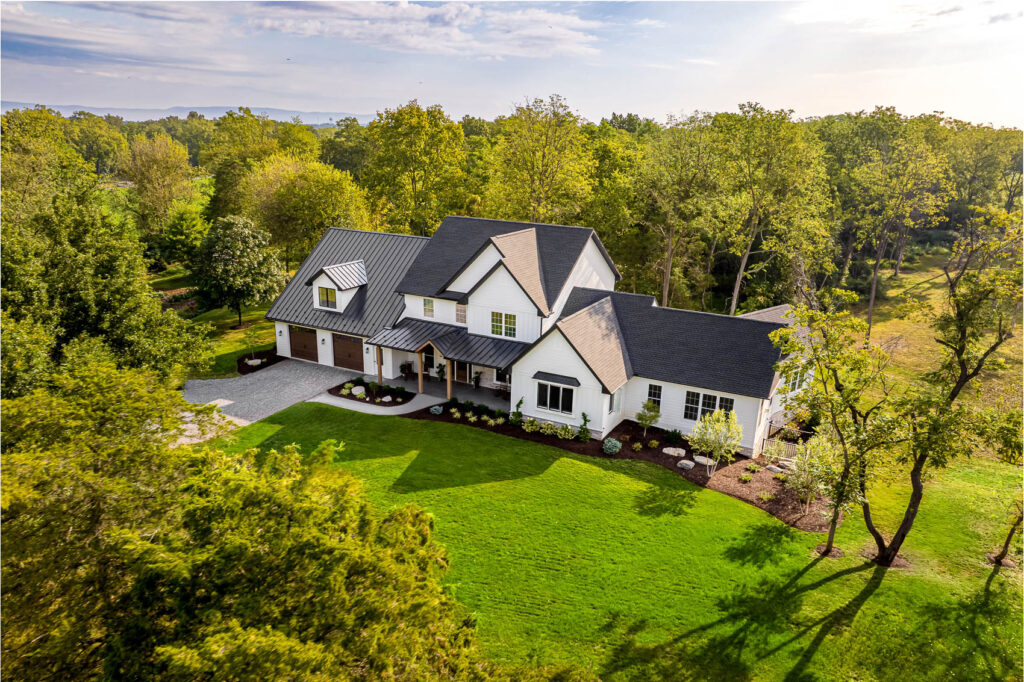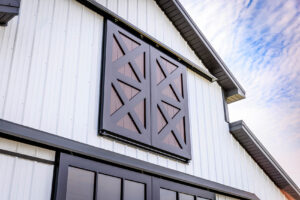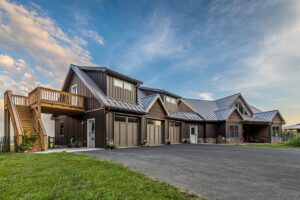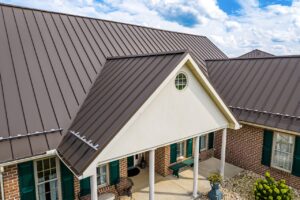

Choosing between galvanized and Galvalume® metal roofing is not about picking the “best” product across the board; it’s about choosing the right metal roofing substrate for the building.
For some projects, Galvalume metal roofing is a great option. For others, especially livestock buildings, galvanized metal roofing is usually the better fit.
The right choice depends on the building type, environment, budget, desired finish, and how much exposure the panels will face over time.
Quick Answer:
Neither galvanized nor Galvalume is automatically better for every project.
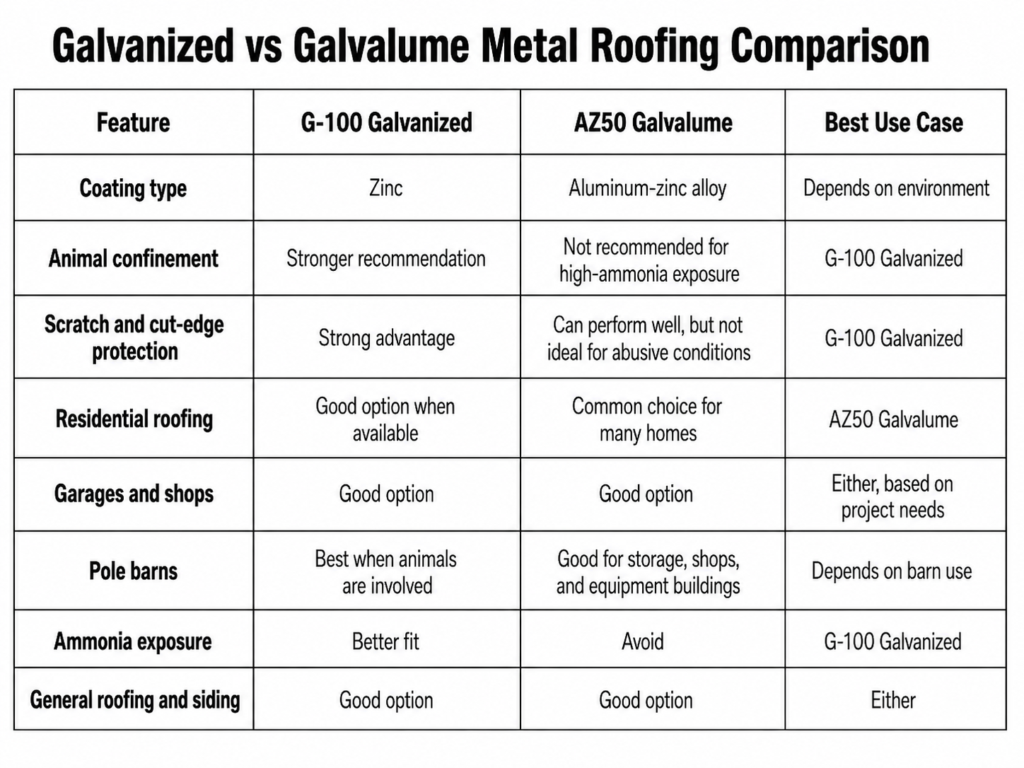
For Cumberland Supply’s ABM Panel, the Premium G-100 Galvanized panel is the stronger recommendation for harsher environments because galvanized steel is generally more damage-proof than Galvalume. If animals, ammonia, scratches, or cut edges are major concerns, galvanized is the safer choice.
However, AZ50 Galvalume is a great, budget-friendly option for residential roofing, garages, shops, storage buildings, and many general roofing and siding applications.
What’s the Difference Between Galvanized and Galvalume?
For this article, we’re mainly talking about painted metal roofing and siding panels used in residential, agricultural, and post-frame applications.
Both galvanized and galvalume are steel panels with protective coatings.
The difference is in the coating.
Galvanized steel is coated with zinc. This helps protect the steel from rust, especially around scratches and cut edges.
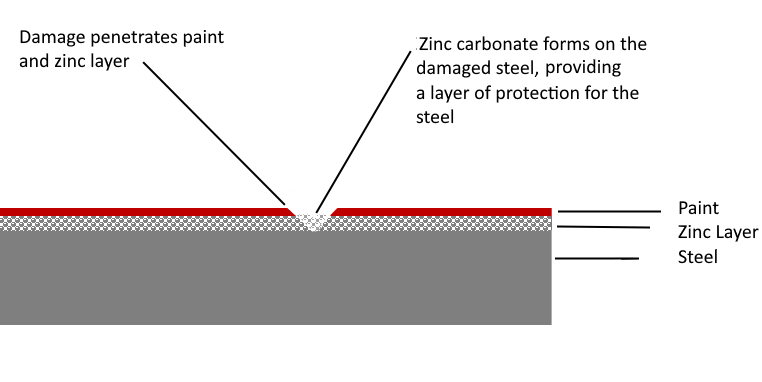
The extra zinc in G100 is faster acting than Galvalume, so scratches and cuts don’t rust as quickly. It performs very well in high-stress environments, including being exposed to animals, ammonia, and cuts or scratches from machinery.
Galvalume steel is coated with an aluminum-zinc alloy. It’s zinc is slower acting, and it performs well in many normal roofing environments and is commonly used for residential, commercial, shop, garage, and general agricultural buildings.
While both can be good options, the G-100 Galvanized performs better in harsher environments.
What’s G-100 Galvanized Steel?
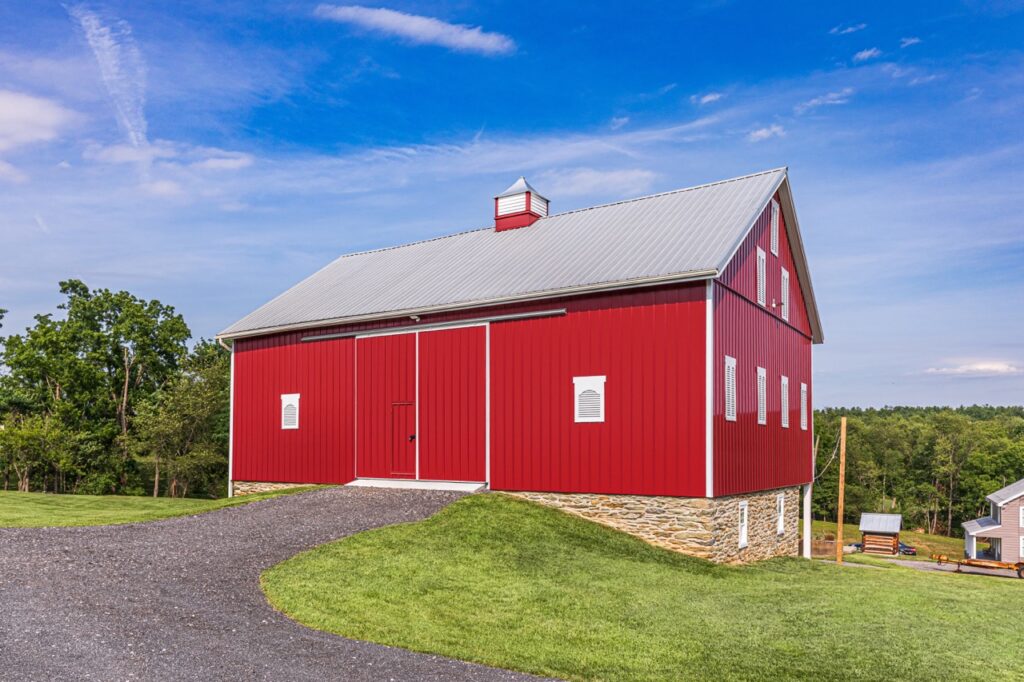
G-100 galvanized steel has an even heavier zinc coating than standard galvanized coating levels.
That extra zinc coating helps protect the steel from corrosion. It is especially helpful when panels may be exposed to deeper scratches, cut edges, moisture, and harsher building conditions.
For Cumberland’s ABM Panel, Premium G-100 Galvanized is recommended for animal confinement applications.
What’s AZ50 Galvalume?
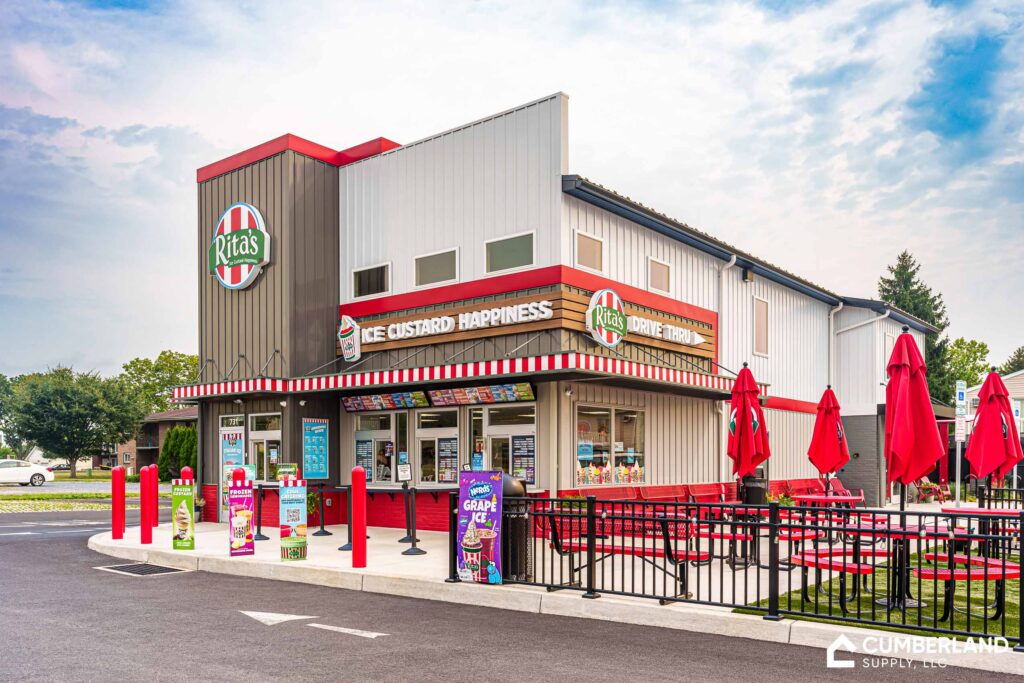
AZ50 Galvalume is steel coated with an aluminum-zinc alloy.
It is commonly used under painted metal roofing panels and can perform very well in many roofing and siding applications.
While Galvalume isn’t recommended for open-faced animal confinement or high-ammonia environments, it’s often a good choice for:
- Homes
- Garages
- Shops
- Storage buildings
- Equipment sheds
- General roofing and siding
- Many non-confinement agricultural buildings
Which One Is Better for Barns?
The best metal roofing for barns depends on what the barn is used for.
A storage barn is different from an animal confinement building. A shop or equipment shed is different from a dairy or poultry building.
For general storage, garages, shops, and many non-abusive agricultural buildings, AZ50 Galvalume can be a solid option.
For metal roofing for animal confinement, Cumberland’s Premium G-100 Galvanized ABM Panel is the stronger recommendation.
The reason is ammonia.
Animal buildings can expose metal panels to moisture, manure, and ammonia. That creates a harsher environment than a normal roof or siding application. In those conditions, galvanized steel is known to resist ammonia better than Galvalume.
Panel substrate matters, but screw placement matters too. See our guide on whether metal roofing screws should go on the rib or the flat.
Choose G-100 Galvanized If…
- The building will house animals
- Ammonia exposure is likely
- Scratches and cut edges are a concern
- The panels may face harder use
- You are building a livestock, dairy, poultry, hog, or horse barn
- You want Cumberland’s stronger recommendation for animal confinement
Choose AZ50 Galvalume If…
- The building is a home, garage, shop, or storage building
- Animal confinement is not part of the project
- Ammonia exposure is not a concern
- The roof or siding will be in a normal environment
- You want a practical, more budget-friendly option for many general roofing applications
Cumberland’s ABM Panel Options
Cumberland Supply’s ABM Panel is used for residential, commercial, and agricultural roofing and siding.
Available options include:
- 28-gauge Standard Galvalume
- 26-gauge AZ50 Galvalume
- Premium G-100 Galvanized
Final Recommendations
When comparing galvanized vs Galvalume metal roofing, do not think of it as one being good and the other being bad.
Think of it as matching the panel to the job.
Choose G-100 Galvanized for animal confinement, ammonia exposure, scratches, and tougher agricultural use.
Choose AZ50 Galvalume for many homes, garages, shops, storage buildings, and general roofing or siding projects.
If you are not sure which ABM Panel option is right for your project, Cumberland Supply can help you compare your building type, environment, panel options, trim, fasteners, and accessories before you order.
Don’t Forget the Rest of the Roof System
The substrate you’re using for your panel matters, but it is not the only part of metal roof rust protection.
Fasteners, washers, trim, sealants, closures, and installation details all matter too. A good panel can still have problems if the wrong screws are used or if the screws are installed poorly.
For more help with fastener placement, read our guide on whether metal roofing screws should go on the rib or the flat.
FAQs
Is galvanized or Galvalume better for metal roofing?
Neither is better for every project. Galvalume is a good option for many normal roofing applications. Galvanized is usually better when animal confinement, ammonia, scratches, or cut edges are major concerns.
What’s the difference between galvanized and Galvalume?
Galvanized steel is coated with zinc. Galvalume steel is coated with an aluminum-zinc alloy. Both protect the steel, but they perform differently depending on the environment.
Is Galvalume okay for barns?
Yes, Galvalume can be okay for many barns, especially storage barns, garages, shops, and equipment buildings. It is not recommended for open-faced animal confinement or high-ammonia environments.
Why is galvanized better for animal confinement?
Galvanized steel is known to resist ammonia better than Galvalume. That matters in livestock, poultry, dairy, hog, and horse buildings where moisture and ammonia may be present.
Does Galvalume rust?
Galvalume is made to resist corrosion, but no steel panel should be treated as rust-proof in every condition. Environment, installation, scratches, cut edges, and maintenance all matter.
What is G-100 galvanized steel?
G-100 galvanized steel has a heavier zinc coating than lower galvanized coating levels. The zinc helps protect the steel from corrosion, especially in harder-use environments.
What does AZ50 Galvalume mean?
AZ50 Galvalume refers to the coating weight of the aluminum-zinc alloy on the steel. It is commonly used for painted Galvalume metal roofing and siding panels.
Which ABM Panel should I choose?
Choose Premium G-100 Galvanized ABM Panel for animal confinement or high-ammonia environments. Choose AZ50 Galvalume for many general-use homes, garages, shops, storage buildings, and non-abusive environments.