
If you are comparing metal panels, you may be asking:
What Gauge Metal Roofing Should I Use?
Quick Answer:
There is no single best gauge for metal roofing.
At Cumberland Supply, standard ABM Panel is offered in 28 gauge, textured ABM Panel is offered in 26 gauge, standard ABSeam Panel is offered in 24 gauge, and textured ABSeam Panel is offered in 26 gauge.
Customers are choosing more than metal panel thickness. Each option is a complete system with its own profile, fastening method, substrate, finish, coverage width, and approved uses.
A lower gauge number generally means thicker steel. That makes 24 gauge thicker than 26 gauge, and 26 gauge thicker than 28 gauge.
However, thicker is not automatically better for every building. The right choice also depends on the panel profile, roof or wall application, support spacing, building use, environment, budget, and manufacturer requirements.
What Does Metal Roofing Gauge Mean?
| Gauge | Cumberland Examples | Main Distinction |
|---|---|---|
| 24 gauge | Smooth ABSeam | Thicker standing seam option |
| 26 gauge | Textured ABM and ABSeam | Used across two different panel systems |
| 28 gauge | Standard ABM | Practical roofing and siding option |
Metal roofing gauge describes steel thickness. With the common roofing gauges in this article, the numbers run backward. 24 gauge is thicker than 26 gauge, and 26 gauge is thicker than 28 gauge.
Actual decimal thickness can vary by product specification. If a project requires a minimum steel thickness, check the panel’s technical data instead of relying only on the gauge number.
The system being used matters more than the gauge alone.
Consider Cumberland’s two 26 gauge options. Textured ABM Panel is an exposed-fastener panel that can be used for roofing or siding, while Textured ABSeam Panel is a standing seam roof panel held in place with hidden clips.
The steel gauge is the same, but the panels have different profiles, coverage widths, fastening methods, and uses. They are not interchangeable.
Our ABM Panel vs. ABSeam Panel guide explains the larger differences between these systems.
How Cumberland’s Panel Gauges Compare
24 Gauge Metal Roofing:
Standard ABSeam Panel is a 24 gauge standing seam system with hidden clips, a 1.5-inch rib, an AZ50 Galvalume substrate, and a smooth finish. Choose it when the full system fits the roof design and appearance goals.
26 Gauge Metal Roofing:
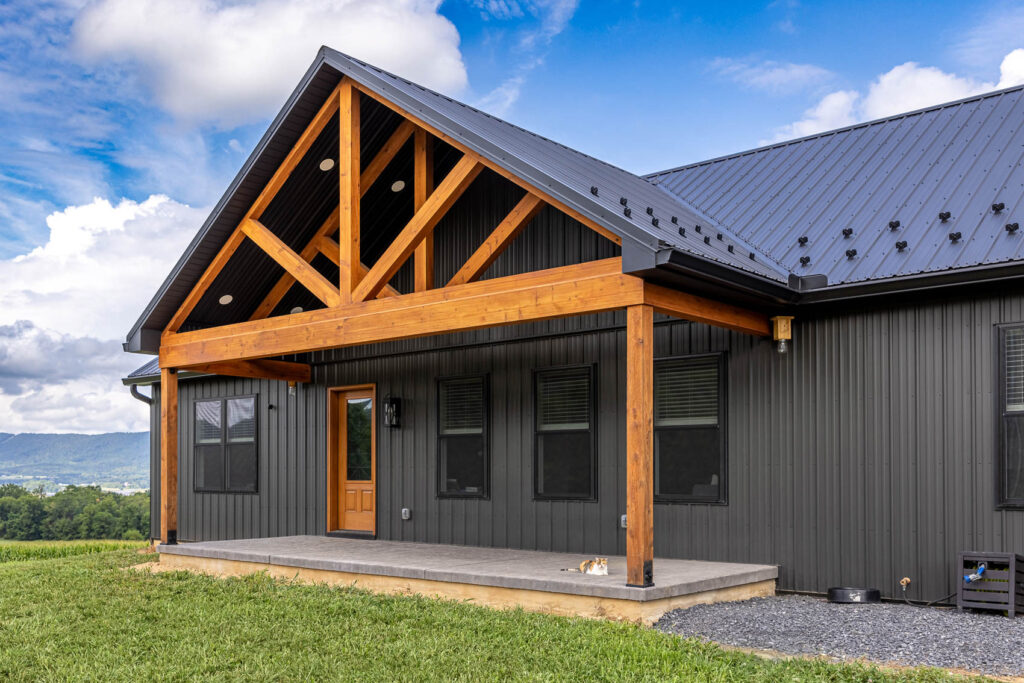
Textured ABM Panel and textured ABSeam Panel are both available in 26 gauge. ABM is an exposed-fastener roofing and siding panel with 36-inch coverage. ABSeam is a standing seam roof panel with hidden clips. The same gauge can serve two very different panel systems.
28 Gauge Metal Roofing:
Standard ABM Panel is offered in 28 gauge. It is used on many homes, barns, garages, shops, commercial buildings, and post-frame buildings. Its ribbed profile, wide coverage, custom lengths, fastening system, and substrate options are designed to work together. For structural projects, check the product data, support spacing, loads, and local building codes.
Gauge Is Not the Same as Substrate or Finish
Gauge describes steel thickness. It does not tell you how the steel is protected or what finish is on the surface.
In Cumberland’s panel specifications:
- Gauge describes relative steel thickness.
- Substrate identifies G-100 Galvanized or AZ50 Galvalume.
- Finish identifies smooth or textured paint options.
These details serve different purposes. For example, Premium G-100 Galvanized ABM Panel is the stronger recommendation for animal confinement because it is better suited to that environment. That choice is about the substrate, not simply the gauge.
Read our galvanized vs. Galvalume metal roofing guide for a closer comparison.
What Else Affects the Right Panel Choice?
- Panel profile: Rib height, rib spacing, width, and seam design affect how the panel works.
- Support conditions: Solid decking and spaced purlins support panels differently.
- Application: A panel approved for siding may not be approved for every roof.
- Project loads: Wind, snow, building height, roof slope, and support spacing can affect the correct choice.
- Installation: Fasteners, clips, flashing, trim, overlaps, and sealants must be installed correctly.
For exposed-fastener panels, see our guide on whether metal roofing screws should go on the rib or the flat.
What Gauge Is Best for a Home or Barn?
For metal roofing for homes, 24, 26, or 28 gauge can all be suitable when used as part of the right panel system.
For metal roofing for barns, start with the building’s use. Premium G-100 Galvanized ABM Panel is the stronger recommendation for animal confinement or high-ammonia environments. AZ50 Galvalume can fit many homes, shops, garages, storage buildings, and non-confinement projects.
In either case, check the panel profile, supports, loads, substrate, and installation requirements.
Questions to Ask Before Choosing a Gauge
- Which panel profile fits the project?
- Will the panel be used for roofing, siding, or both?
- Will it be installed over solid decking or spaced supports?
- What are the support or purlin spacings?
- What wind and snow loads apply?
- What do local building codes require?
- Is the building a home, shop, storage building, or animal barn?
- Which substrate fits the environment?
- Does the project call for exposed fasteners or hidden clips?
- What minimum steel thickness is listed in the technical data?
- Which complete system fits the budget?
The Bottom Line
If you’re asking, “What gauge metal roofing should I use?” start with the building and the panel system, not the gauge number.
A lower gauge number generally means thicker steel, but thicker is not automatically better. Choose based on the panel profile, application, supports, environment, finish, budget, and manufacturer requirements.
Not sure which panel or gauge fits your building? Call Cumberland Supply or stop by the store in Newville, PA. Our team can help you compare panel profiles, gauges, substrates, finishes, fasteners, and installation requirements before you order.
FAQs
Is 24 or 26 gauge metal roofing better?
Neither is better for every project. A 24 gauge panel is generally thicker, but the right option depends on the complete panel system and building requirements.
Is 28 gauge metal roofing good for a house?
It can be. Standard 28 gauge ABM Panel is used for residential, commercial, and agricultural projects when installed within the product requirements.
What gauge metal roofing is best for a barn?
There is no single best barn gauge. Building use, support spacing, loads, panel profile, and substrate all matter.
Does thicker metal roofing last longer?
Not by itself. Substrate, coating, installation, fasteners, environment, and maintenance also affect roof life.
Is a lower gauge number thicker?
Yes. With common steel roofing gauges, 24 gauge is thicker than 26 gauge, and 26 gauge is thicker than 28 gauge.
Does gauge affect hail resistance?
Gauge may affect how a panel reacts to impact, but panel profile, supports, material properties, finish, and hail size also matter.
What gauge is ABM Panel?
Standard ABM Panel is offered in 28 gauge. Textured ABM Panel is offered in 26 gauge.
What gauge is ABSeam Panel?
Standard ABSeam Panel is offered in 24 gauge. Textured ABSeam Panel is offered in 26 gauge.
Are gauge and substrate the same thing?
No. Gauge describes steel thickness. Substrate identifies options such as G-100 Galvanized or AZ50 Galvalume.